

Quick answer
Cairns to Great Barrier Reef time ranges from 45 minutes to 2.5 hours by boat, depending on the reef site. Inner reef locations like Green Island sit 45 minutes offshore, while outer reef platforms such as Agincourt Reef require 90 minutes to two hours. High-speed catamarans reach distant sites faster than traditional vessels, and early morning departures between 7:00 and 9:00 offer calmer seas and longer reef time.
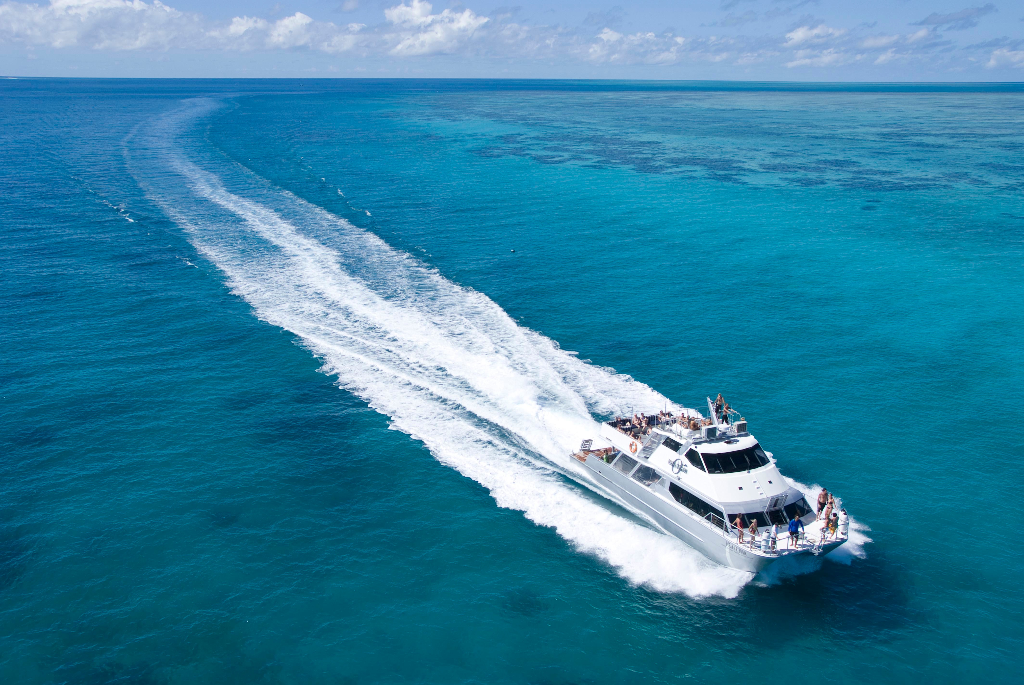
The Great Barrier Reef is not a single destination but a living structure spanning 2,300 kilometers along the Queensland coast. Cairns sits roughly midway along its length, and the reef's inner edge lies 30 kilometers offshore while the outer ribbon stretches nearly 80 kilometers into the Coral Sea. Travel time from Cairns depends entirely on which section of reef your operator targets, and that choice determines not only the journey length but the quality of the marine environment you encounter. Most tour operators divide reef access into three tiers. Green Island and Fitzroy Island anchor the inner zone at 12 and 16 nautical miles respectively, reachable in under an hour aboard standard ferries. Mid-reef sites like Hastings Reef and Saxon Reef sit 30 to 40 nautical miles offshore and require 75 to 90 minutes aboard modern catamarans. Outer reef platforms including Agincourt Ribbon Reefs and Flynn Reef push beyond 50 nautical miles, where coral systems meet the open ocean and the cairns to great barrier reef time extends to two hours or more. Operators running to these distant platforms leave earlier and return later to justify the extended transit. Vessel type governs speed as much as distance does. High-speed wave-piercing catamarans cruise at 25 to 30 knots and cut outer reef transit to 90 minutes, while older mono-hull vessels lumber along at 12 to 15 knots and stretch the same route past two hours. Weather compounds the equation: trade winds blow strongest between May and October, and southeasterly swells add 15 to 30 minutes to any offshore passage as captains throttle back for passenger comfort. The cairns to great barrier reef time advertised in brochures reflects calm-water averages, not rough-weather reality. Early departures between 7:00 and 9:00 AM capture the window when overnight winds have not yet built and tidal currents run weakest. Arriving at reef sites before 10:30 AM also means clearer water, fewer boats at mooring pontoons, and three to four uninterrupted hours for snorkeling or diving before the return leg begins. Operators offering full-day excursions of six hours or more build the transit cost into extended reef time, while half-day trips compress everything into a tighter rhythm that leaves less margin for delays. The Environmental Management Charge of 8.5 AUD applies to any reef visit lasting three hours or longer, a threshold that excludes only the shortest island-hopping routes and confirms that serious reef access requires serious travel time.
“The reef's inner edge lies 30 kilometers offshore while the outer ribbon stretches nearly 80 kilometers into the Coral Sea.”
Typical Travel Time and Itinerary for Cairns to Great Barrier Reef
Most full-day reef trips from Cairns follow a similar pattern, departing early morning and returning mid-afternoon. This timeline reflects typical outer reef excursions with 90–120 minutes each way of travel.
Marina Check-In and Boarding
Arrive at Cairns marina for check-in, safety briefing, and boarding. Vessels typically depart between 08:00 and 08:30.
Outbound Transit to Reef
Travel time to outer reef sites like Agincourt Reef or Moore Reef ranges from 90 minutes to two hours depending on conditions and destination.
Reef Activities and Lunch
Spend four to five hours at moored pontoons or designated sites for snorkeling, diving, and guided reef tours. Lunch is served on board.
Return Transit to Cairns
The return journey mirrors the outbound leg, with arrival back at Cairns marina typically between 16:00 and 16:30.
Disembarkation
Collect belongings, review any purchased dive photos or footage, and disembark at the marina.
Best Time of Day and Season for Cairns to Great Barrier Reef Travel
The best arrival window for reef travel is 07:00–09:00, as early morning departures offer better ocean conditions and more time at reef sites. Visiting during the transition months of the dry season provides a balance of favorable water temperatures and stable weather.
Weekday mornings
Lower volume of day trippers—
Less congestion during boarding and at reef sites.
June to August
Moderate tourist numbersCooler air, 18°C–26°C
Ideal for comfortable snorkeling in mild conditions.
September to November
Peak season, higher occupancyWarmer, 22°C–30°C
Excellent water clarity and calm seas for reef access.
December to May
Variable crowd levelsHot and humid, 24°C–32°C
Increased chance of rain and warmer water temperatures.
Verdict: The best time to visit is during the shoulder months of April or October, arriving for the 07:00–09:00 departure window to ensure optimal ocean conditions.
Operational Hours for Cairns to Great Barrier Reef Access
The Great Barrier Reef Marine Park is accessible 24 hours a day, seven days a week. Specific reef trip departure times are determined by individual tour operators.
| Monday | 00:00–23:59 | |
|---|---|---|
| Tuesday | 00:00–23:59 | |
| Wednesday | 00:00–23:59 | |
| Thursday | 00:00–23:59 | |
| Friday | 00:00–23:59 | |
| Saturday | 00:00–23:59 | |
| Sunday | 00:00–23:59 |
Pre-Visit Checklist for Your Cairns to Great Barrier Reef Journey
Prepare these essentials before your departure from Cairns marina to ensure a smooth reef experience.
-
Book your reef tour in advance — Most operators depart early morning and fill quickly during peak season.
-
Confirm pickup time and marina location — Cairns has multiple departure points; verify your exact boarding terminal the day before.
-
Pack reef-safe sunscreen and swimwear — Chemical sunscreens damage coral; bring biodegradable options and a rash guard for sun protection.
-
Bring motion sickness medication if needed — Ocean conditions can be choppy; take tablets 30–60 minutes before departure.
-
Carry cash for the Environmental Management Charge — The 8.50 AUD per-person reef levy is collected on board and may require cash payment.
-
Check weather and sea conditions — Tour operators post updates on their websites; rough seas may delay or modify your itinerary.
Check availability
Frequently Asked Questions About Cairns to Great Barrier Reef Time
Everything you need to know about cairns to great barrier reef time